
A fall in the value of your ETF portfolio, or a drawdown, does not necessarily mean it has drifted from your investment plan. What you need to check is whether the current asset allocation, risk level and financial goals still match the parameters you set at the start.
An ETF is an exchange-traded fund that tracks an index, such as the S&P 500 or Nasdaq-100, and trades like an ordinary stock. ETFs in a portfolio move at different rates, so their weights shift over time, changing the overall risk. Below, we explain how to compare the actual allocation with the target regularly and how to tell when a deviation needs attention or rebalancing.
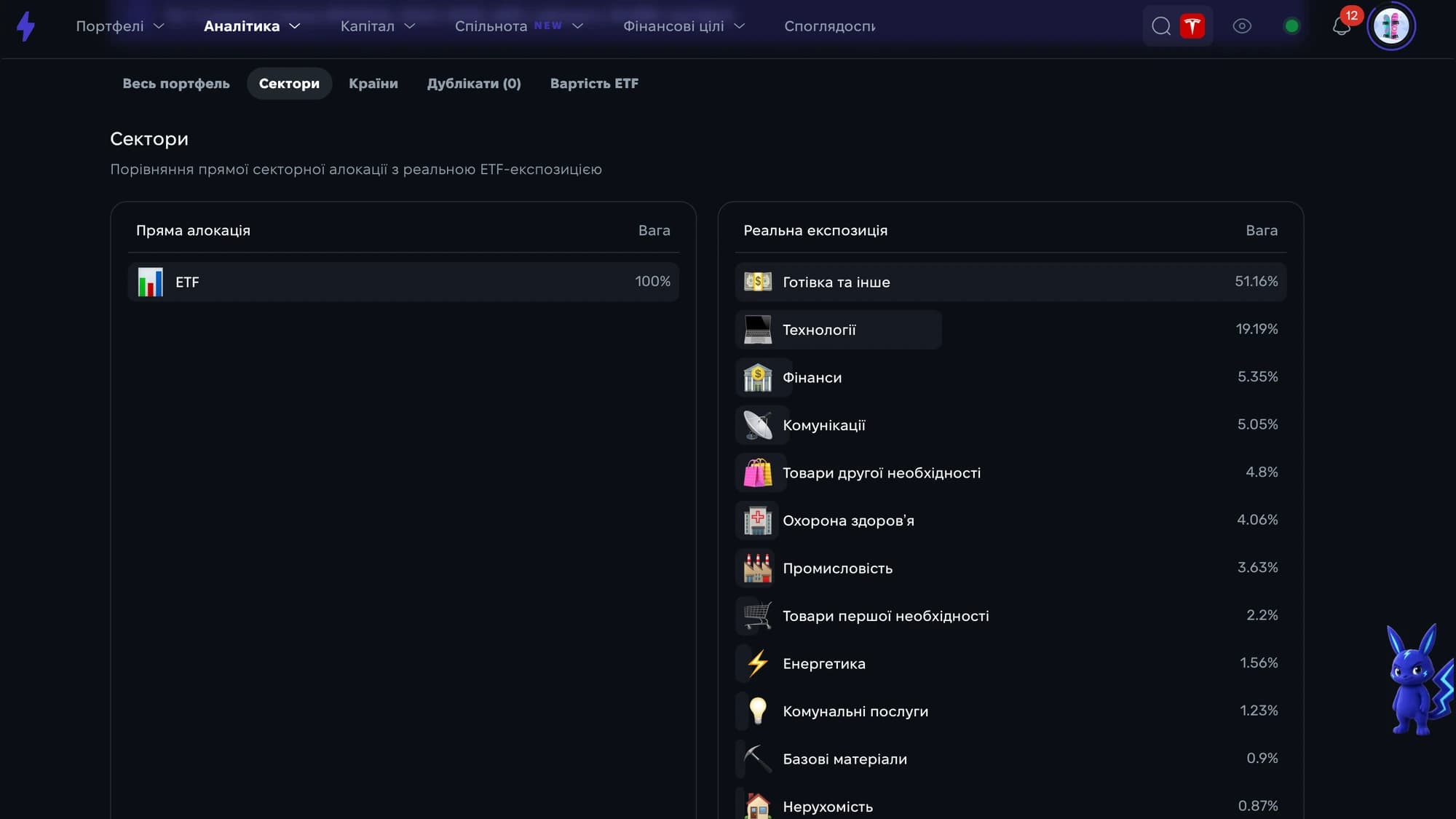
What ETF portfolio drift means
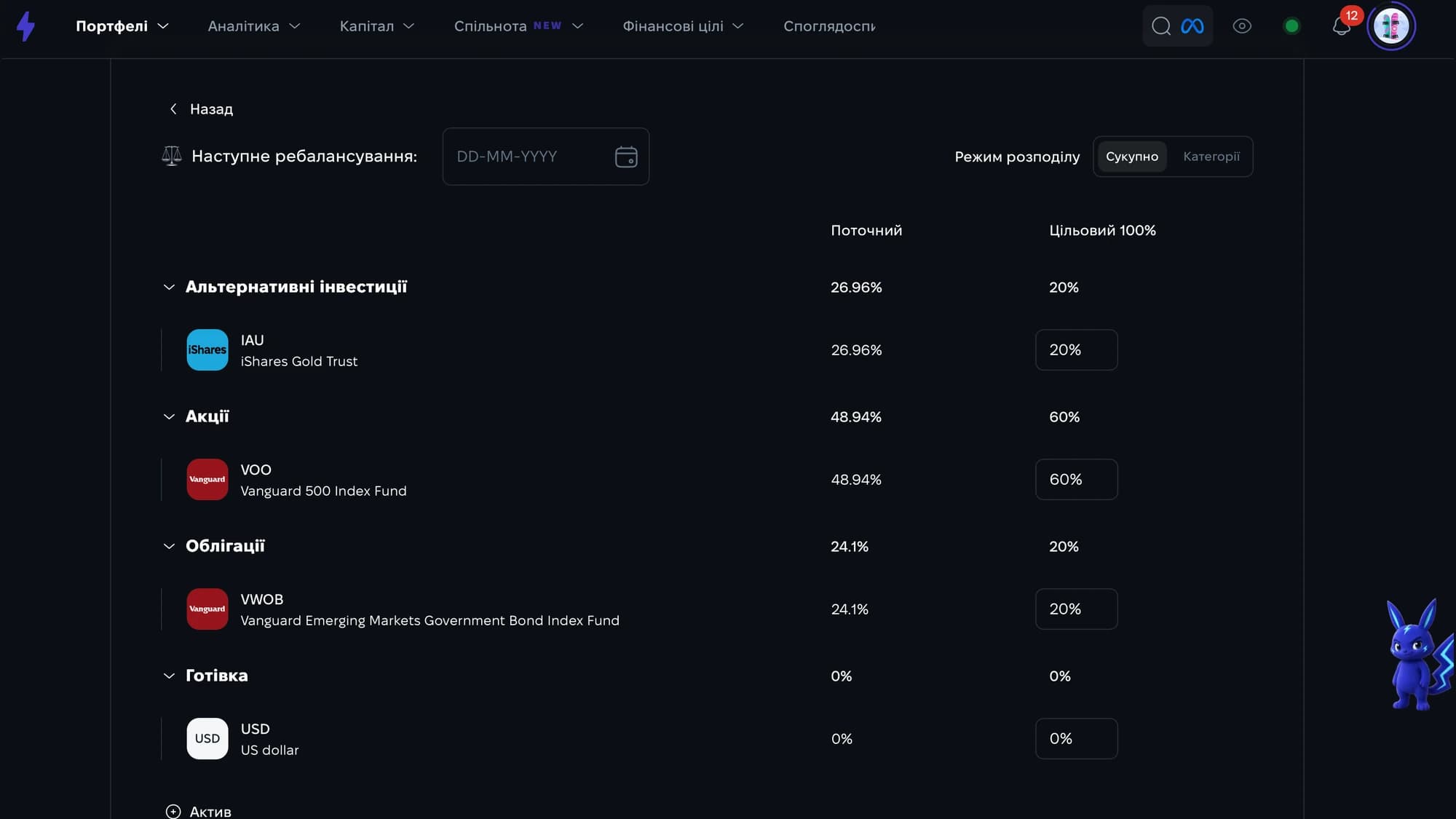
Portfolio drift is the difference between the planned allocation in your strategy and the actual allocation today. The planned allocation shows the share of capital you intended to hold in each ETF or asset class. The actual allocation shows their weights at current prices.
For example, you built an ETF portfolio with 60% stocks, 30% bonds and 10% gold. Over a year, the S&P 500 fund rose and bonds fell slightly, so stocks now account for 67%. You have bought or sold nothing, but the portfolio no longer has the planned allocation.
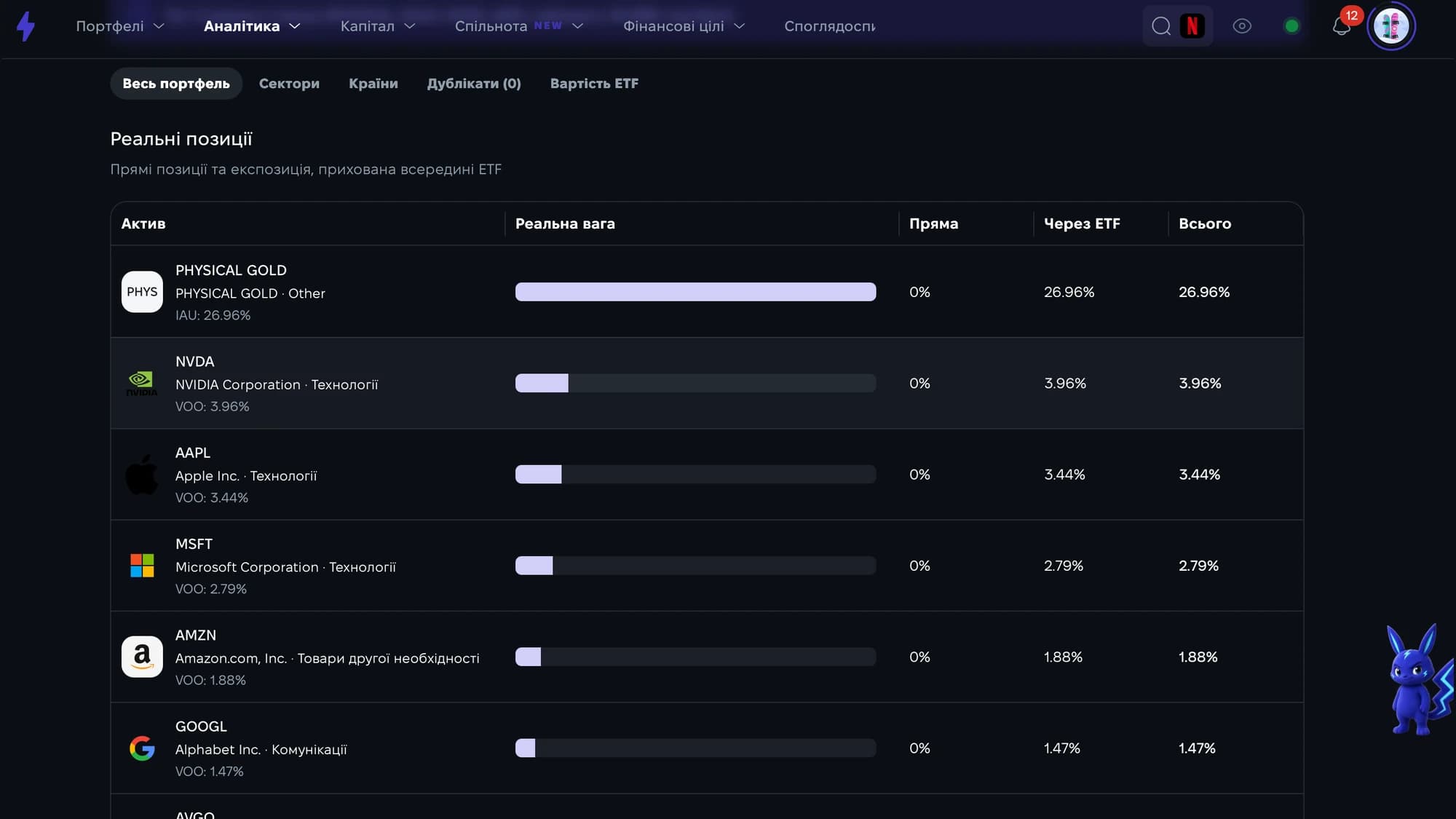
Changes in portfolio risk
When the proportions change, risk changes too. If the stock allocation has increased, the portfolio has become more aggressive: during the next market downturn, it will lose more than you expected. If stocks have fallen sharply while bonds have not, the portfolio becomes more conservative, and its long-term return may fall below the plan.
Main causes of ETF portfolio drift
| Cause | Explanation |
|---|---|
| Market movements | ETF prices change constantly, shifting position weights even without any action from you |
| Different asset returns | technology stocks may grow faster than bonds, increasing their weight |
| New contributions | directing contributions into one ETF shifts the allocation towards it |
| Withdrawals | selling one position to withdraw money changes the proportions of the rest |
| Dividends | payments accumulate as cash or are reinvested in the same fund |
| Changes within an ETF | the fund changes its index, holdings or company weights, changing your actual exposure |
| Changes in goals or horizon | the portfolio has not changed, but the plan it was built for is no longer relevant |
How to check whether your ETF portfolio matches the plan
1. Find the original plan and target allocation
Write down the target weights for each ETF or asset class, your investment horizon, financial goal and acceptable risk level. Without these parameters, there is nothing to compare against.
2. Determine the current portfolio allocation
Record the current market value of each position and its share of the total portfolio value. If your ETFs are held at several brokers, bring everything into one spreadsheet or an investment tracker that displays allocation automatically.
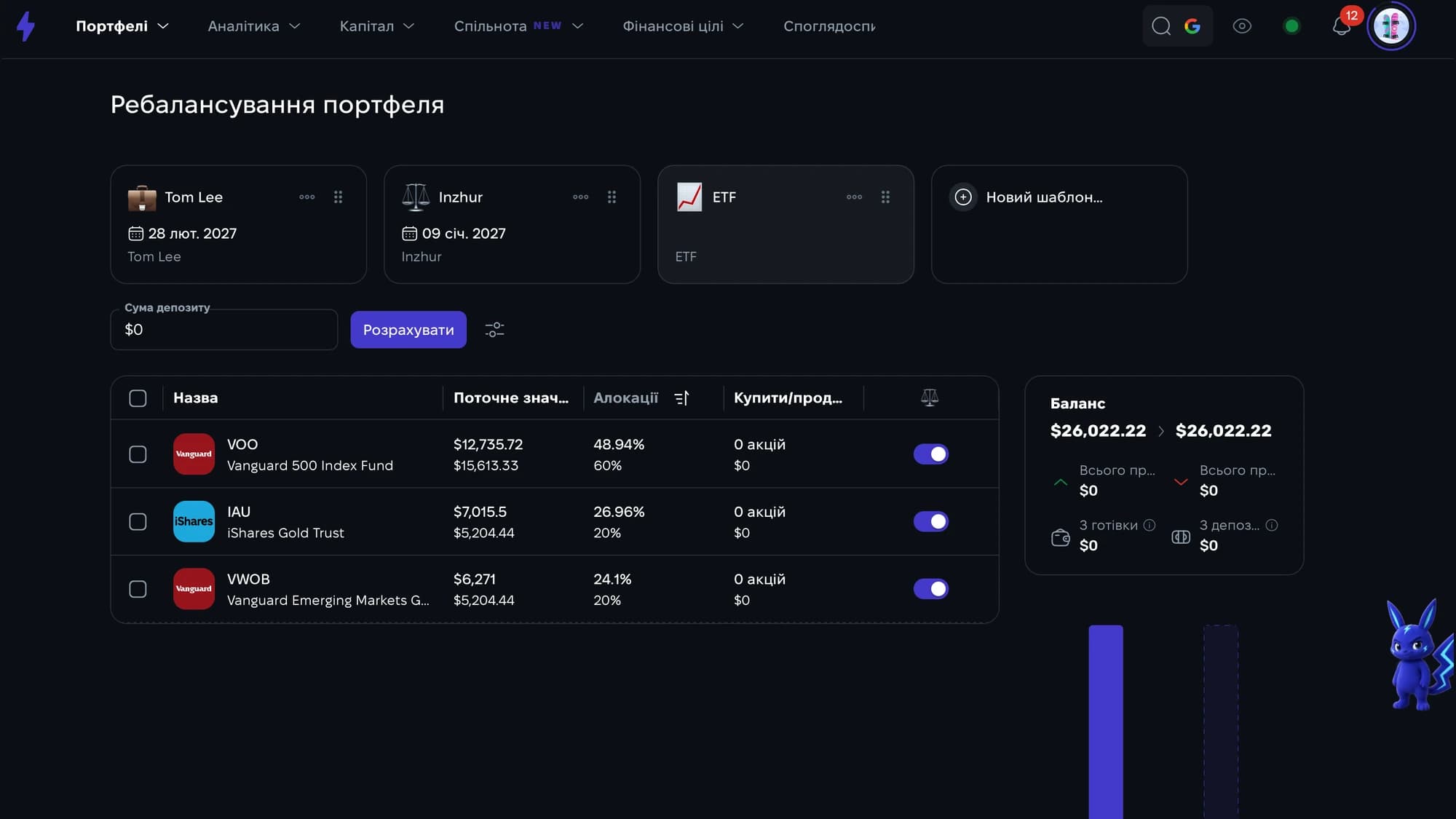
3. Compare actual and target weights
Put each ETF's actual weight next to its target weight from the plan. The difference is the deviation. We show how to calculate it in the next section.
4. Check concentration and risk level
Check whether one asset, sector, country or ETF has become too large a share of the portfolio. For example, S&P 500 and Nasdaq-100 funds share many technology companies, so two different ETFs may duplicate the same risk.
5. Assess the drawdown
A drawdown is a fall in portfolio value from a previous peak. If the portfolio was worth $12,000 and is now worth $10,200, its current drawdown is 15%. Compare current and maximum drawdown with the level allowed for in your plan. A decline in ETF value within the expected range for that allocation is not a signal to make changes.
6. Check whether your goals have changed
Has the time until your goal shortened? Has your income changed? Do you have a financial reserve? Are you planning large expenses that will require liquidity? If any of these have changed, you need to review the plan itself as well as the portfolio.
7. Decide whether action is needed
Finding a deviation does not mean you should immediately sell or buy more. Possible responses include doing nothing if the deviation is within acceptable limits, directing the next contributions towards underweight assets, rebalancing, or revising the plan if your goals have changed.
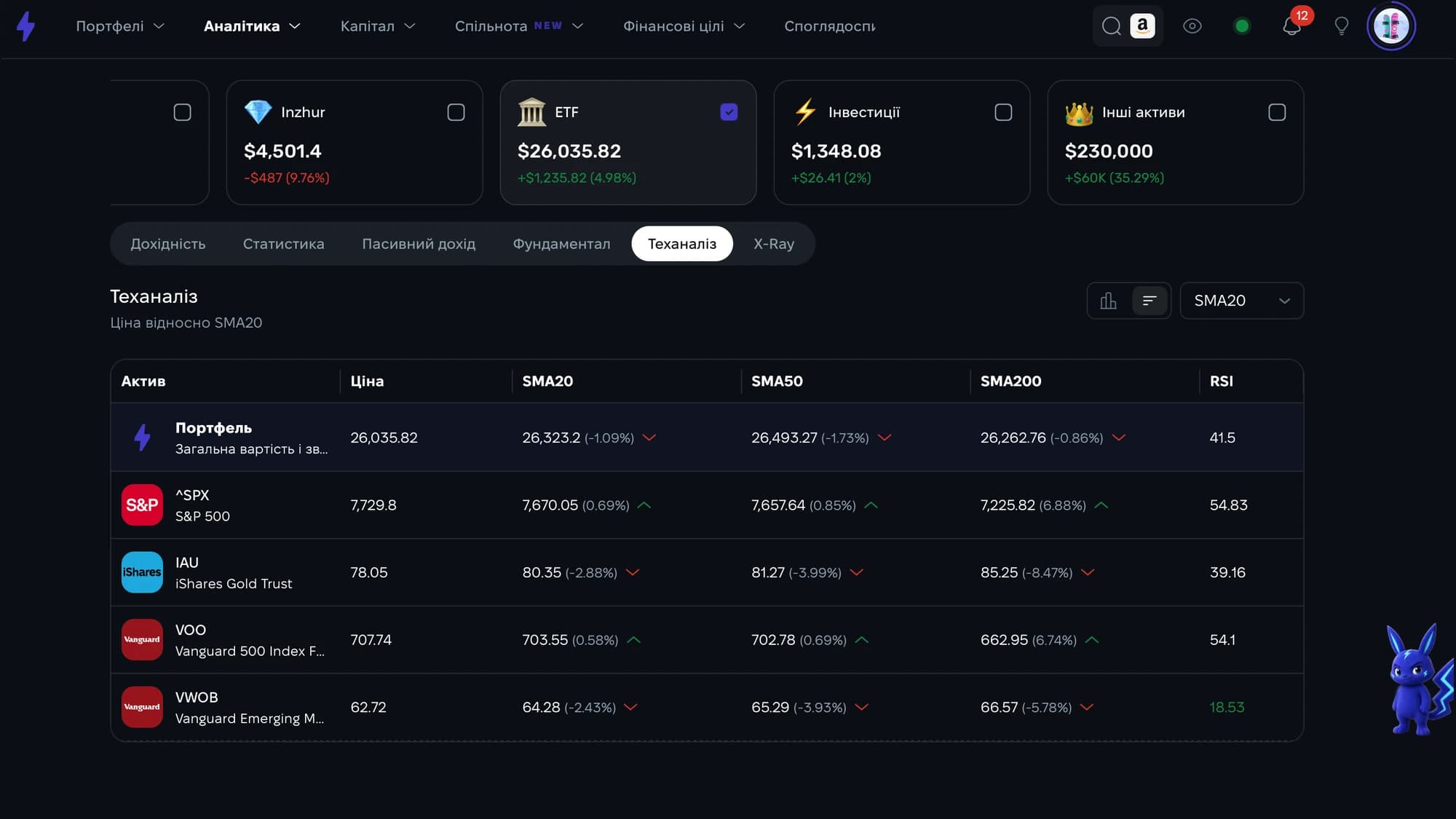
How to calculate ETF portfolio drift from the target allocation
To move from the feeling that your portfolio has somehow changed to specific numbers, you need the target weight of each ETF or asset class, its actual current weight, the total portfolio value and the rules you planned to use for monitoring allocation.
Consider a $10,000 portfolio with a 60/30/10 allocation that grew to $12,000 over a year.
| Asset | Target weight | Current value | Actual weight |
|---|---|---|---|
| Stock ETF (S&P 500) | 60% | $8,040 | 67% |
| Bond ETF | 30% | $2,880 | 24% |
| Gold ETF | 10% | $1,080 | 9% |
| Total | 100% | $12,000 | 100% |
Absolute deviation from the target weight
This shows how many percentage points the actual asset weight differs from its target.
Absolute deviation = actual weight − target weight
In this example: stocks 67% − 60% = +7 percentage points, bonds 24% − 30% = −6 percentage points, and gold 9% − 10% = −1 percentage point.
Relative deviation
This is an additional analytical measure, rather than a mandatory rebalancing standard. It tells you how large the deviation is relative to the asset's target weight.
Relative deviation = absolute deviation ÷ target weight × 100%
In this example: stocks 7 ÷ 60 = +11.7%, bonds −6 ÷ 30 = −20%, and gold −1 ÷ 10 = −10%. Stocks shifted the most in absolute terms, while bonds shifted the most in relative terms: their allocation is one fifth smaller than planned. The relative measure often makes deviations in smaller positions more noticeable.
What level of portfolio drift is acceptable?
There is no universal percentage beyond which an ETF portfolio automatically has too much drift. The acceptable level depends on asset allocation, investment horizon, financial goals and the decline you can afford and are willing to withstand. A portfolio with a 20-year horizon and savings for an apartment in two years will have different limits.
How to set your own risk limit
- Decide what monetary loss you are prepared to see in your account without selling assets in a panic. A dollar amount feels different from a percentage.
- Check your horizon and reserve. The shorter the time until your goal and the smaller your emergency fund, the tighter the limit should be.
- Look at historical declines in the assets you hold. For example, the S&P 500 lost more than 50% from its peak in 2008–2009 and about a third in 2020. Assess the drawdown your allocation would produce in such a scenario.
- Set a deviation range for each asset class: for example, ±5 percentage points for large positions and a narrower range for small ones.
- Write these rules into the plan so that decisions depend on numbers rather than news.
How often should you check an ETF portfolio?
Checking a portfolio and rebalancing it are different actions. You can check often, while changes to allocation should follow your rules. There are three common approaches:
| Approach | When to check | Trigger |
|---|---|---|
| Calendar-based | on a schedule | the review date arrives |
| Threshold-based | when allocation drifts | the acceptable deviation range is exceeded |
| Hybrid | on a schedule | the review finds that the acceptable deviation range has been exceeded |
How to interpret the review results
| Finding | What it may mean | What to check next |
|---|---|---|
| An ETF has fallen in price | normal market fluctuations or an issue with the fund | changes in its index and whether its strategy has changed |
| The entire portfolio is in a drawdown | a broad market decline | whether the drawdown is within the limit in your plan |
| Stocks now make up a larger share | the portfolio has become riskier | absolute deviation against your allowed range |
| One ETF has too large a weight | risk concentration has increased | overlap with other funds, sector and country exposure |
| The horizon for a financial goal has changed | the allocation may not suit the new deadline | whether risky assets need to be reduced |
| Allocation is within the thresholds | the portfolio matches the plan | make no changes until the next review |
When portfolio drift may call for rebalancing
Consider rebalancing when the actual allocation has moved so far from the target that the portfolio no longer matches your defined risk level or plan rules. For example, the stock allocation has moved beyond the ±5-percentage-point range you set.
Rebalancing controls allocation and risk. It does not predict which asset will rise next. Before selling, consider fees and taxes: it is often cheaper to restore the allocation with new contributions than by selling. In Strum, you can enter a contribution amount, and the service calculates which ETFs to buy to move closer to the target weights.
How to prepare an ETF portfolio for future drawdowns
- Your risk budget is defined: you know what monetary drawdown you are prepared to withstand.
- A financial reserve covering 3–6 months of expenses is held separately from investments, so a market decline does not force you to sell ETFs.
- The portfolio is diversified across asset classes, countries and sectors, as well as across individual funds.
- Review rules are written down: how often you check the allocation.
- Rebalancing rules are written down: what deviation triggers action and how you will act.
Common mistakes when checking an ETF portfolio
- Reacting to every loss. Price fluctuations are a normal part of ETF investing, not a signal to act.
- Changing strategy after a decline. Decisions made under the pressure of losses often lock in losses at the bottom.
- Looking only at P&L. Profit or loss does not tell you whether the target allocation is intact.
- Comparing with an irrelevant benchmark. A balanced 60/30/10 portfolio will lag the Nasdaq in growth years; that is built into its design.
- Confusing ETF tracking error with portfolio drift. Tracking error concerns how a fund deviates from its index. Portfolio drift concerns your asset weights.
Practical checklist: does my ETF portfolio still match the plan?
- Do I know the target weight of each main asset class?
- What is the actual weight of each asset now?
- How far does the actual allocation differ from the target?
- What is the current drawdown, and does it match the risk allowed for in my plan?
- Is my financial goal still relevant?
- Has my investment horizon changed?
- Have my financial circumstances or liquidity needs changed?
- What are the potential costs or tax consequences of rebalancing?
- Am I making decisions according to predefined rules rather than short-term market moves?
This material is for informational purposes and is not investment advice. You make your own investment decisions.