
An investment portfolio is a collection of assets that an investor holds and manages according to their financial goals, investment horizon and acceptable level of risk. A portfolio can include stocks, bonds, funds, real estate or cash.
Below, we explain what makes up an investment portfolio, the main portfolio types, why diversification matters and how to build a portfolio step by step.
An investment portfolio in simple terms
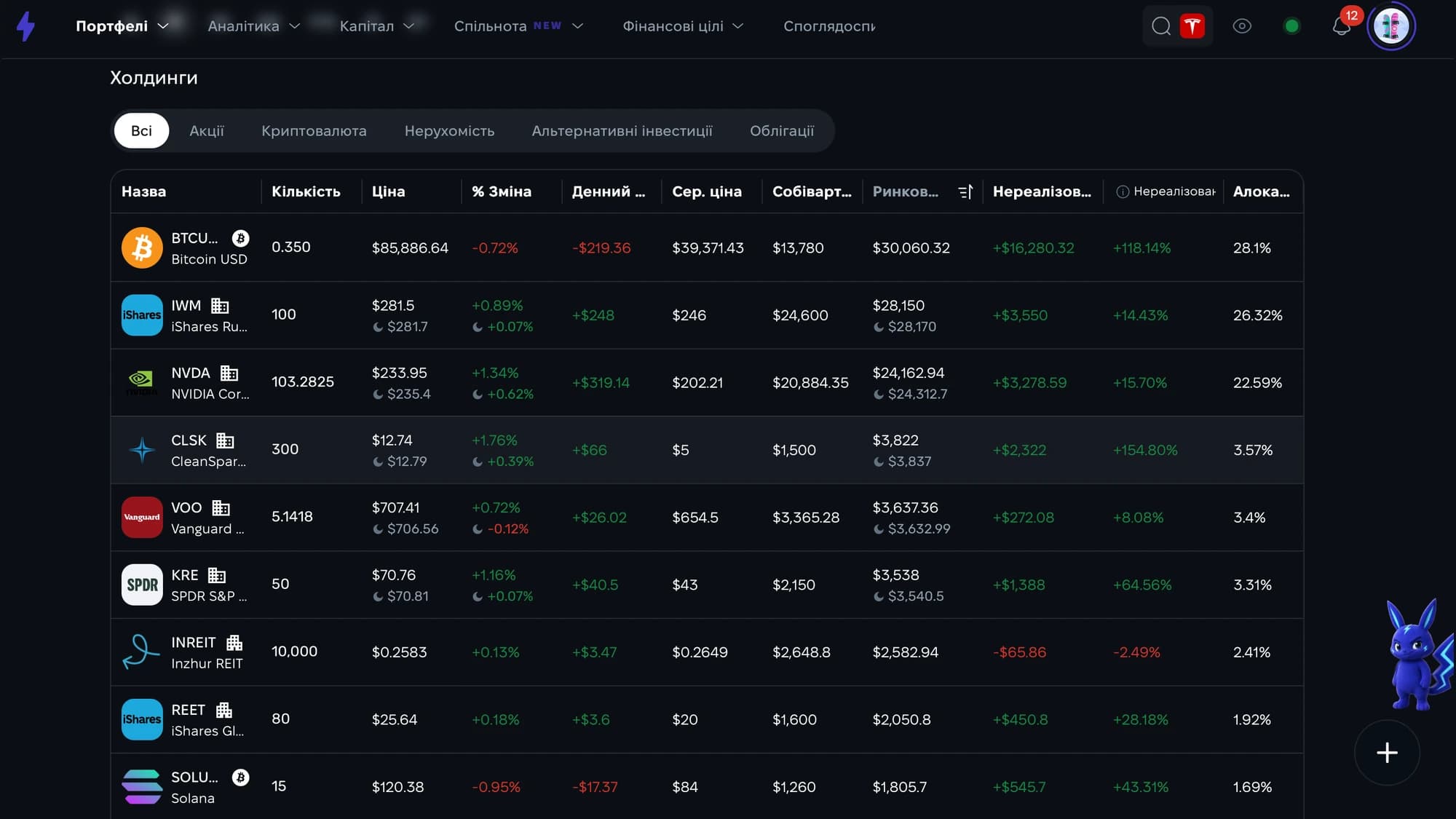
A portfolio is a set of investments in which each has a role. Some assets support capital growth, others provide steady income, and others let you access money quickly when you need it.
For example, someone who invests some money in bonds, some in stocks and keeps some in more liquid instruments already has a portfolio of several assets.
A portfolio can belong to an individual or a company. The principle is the same: assets are chosen to meet the owner's specific needs.
What an investment portfolio is for
A portfolio serves a broader purpose than simply making more money. It connects money to specific financial goals: saving for a home in five years, building retirement capital or receiving regular dividend income.
Its second purpose is to manage the balance between risk and potential return. When capital is spread across different types of assets, a fall in one asset's price has less impact on the total portfolio value. A defined allocation also makes it easier to assess investment performance and notice when something moves away from the plan.
What an investment portfolio contains
An investment portfolio includes different asset classes. You do not need to hold all of them at once: the mix depends on your goals and circumstances.
| Asset | Role in the portfolio | Main risk |
|---|---|---|
| Stocks | capital growth, sometimes dividends | large price swings, problems at an individual company |
| Bonds, including Ukrainian government bonds (OVDP) | regular coupon income, stability | issuer risk, interest rate changes, inflation |
| ETFs and investment funds | broad diversification through one instrument | market risk, fund fees |
| Real estate or real estate funds | rental income, protection against inflation | low liquidity, property or manager risk |
| Cash and deposits | liquidity, reserve for contributions | loss of purchasing power through inflation |
| Other assets, such as gold and cryptocurrency | protection during crises, speculative potential | high volatility, valuation difficulties |
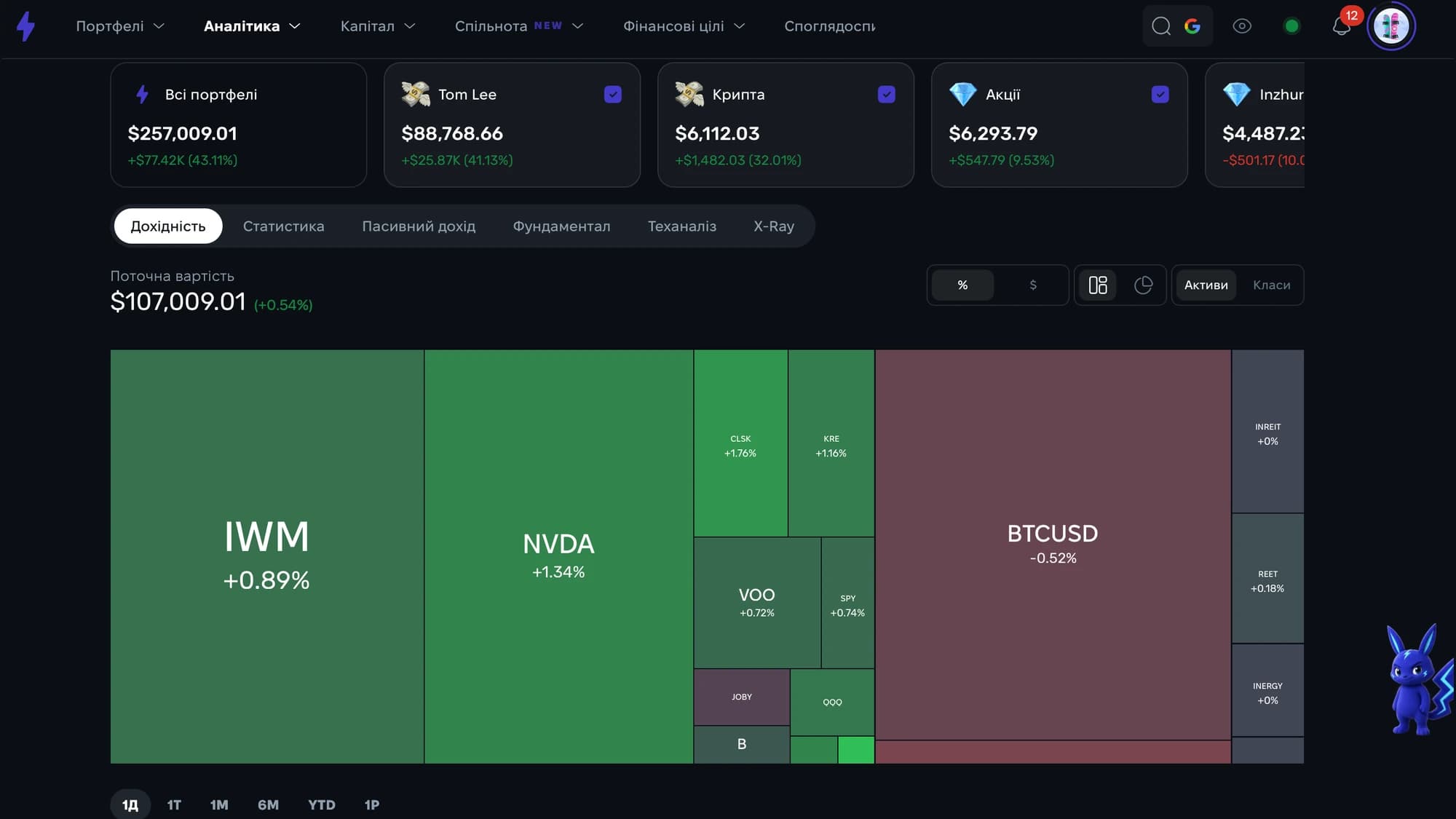
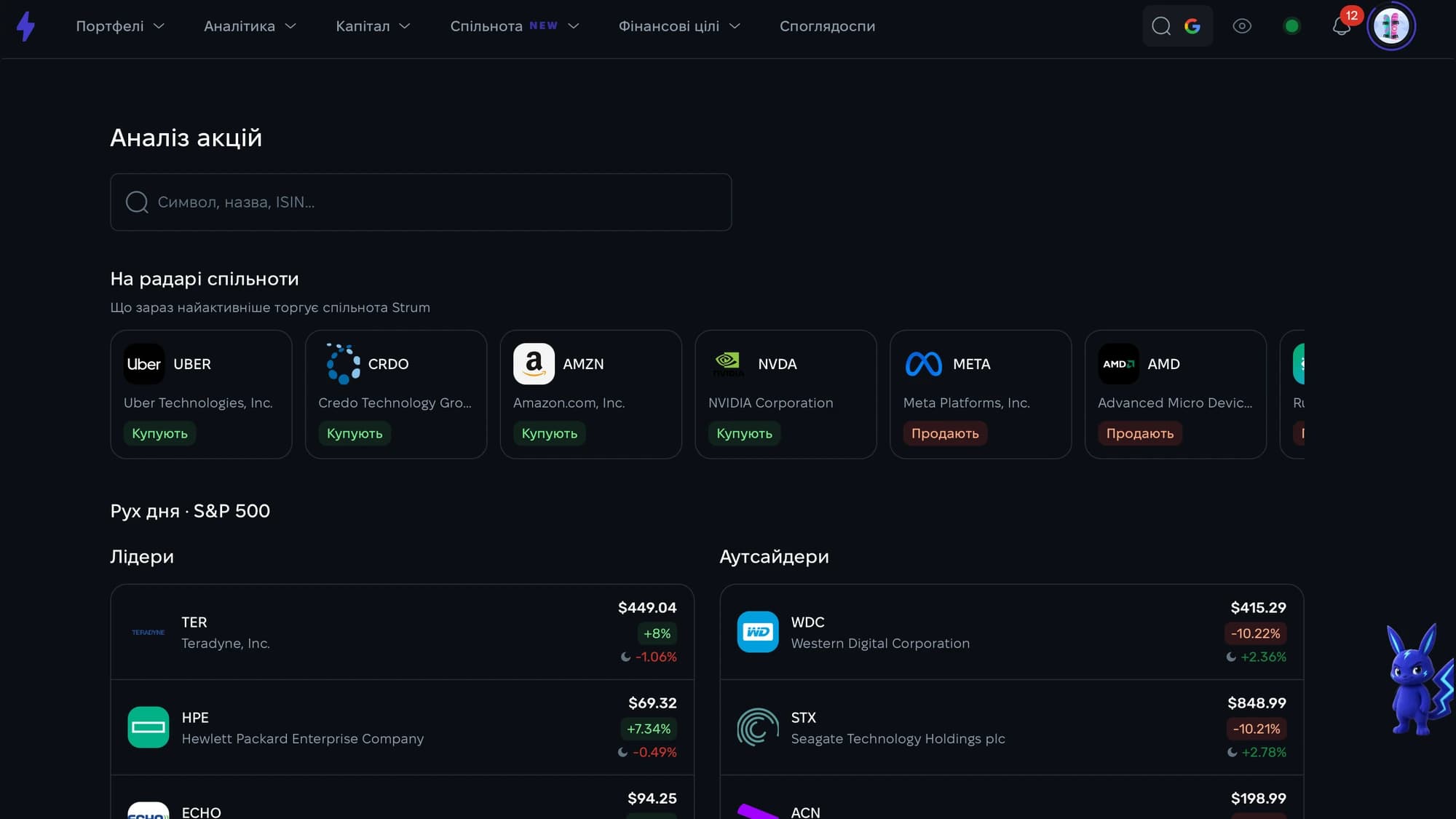
When assets are held at different brokers and banks, seeing the full picture is difficult without separate spreadsheets. Our investment tracker brings stocks, bonds, funds and cash together in one dashboard, while Ukrainian government bonds have a dedicated OVDP tracker.
What determines your investment portfolio allocation
There is no single correct portfolio for everyone. Two people with the same amount of money can have very different allocations, and both can make sense. The choice depends on goals, time horizon, attitude to risk, liquidity needs and financial circumstances.
Investment horizon
Your horizon is the time until you need the invested money. If you need it in a year or two, the portfolio has little time to recover after a market downturn. With a 15–20-year horizon, short-term fluctuations matter less, so a larger allocation to more volatile assets may be acceptable.
Investment goal
The goal shapes the portfolio. Capital preservation calls for stable instruments; maximum growth calls for assets with greater potential and risk; regular income calls for instruments that pay coupons, dividends or rent.
Risk tolerance
There are two separate questions here. First, are you psychologically prepared to see your portfolio fall by 20–30% without selling everything in a panic? Second, can you afford that financially?
For example, someone may be comfortable with market fluctuations but plan to use the money to buy an apartment next year. Their psychological risk tolerance is high, but their financial capacity to take risk is low. Use the lower of the two as your guide.
Liquidity
Liquidity describes how quickly an asset can be sold without a significant loss in value. Shares in large companies or ETFs can be sold in minutes; real estate can take weeks or months. If you might need money unexpectedly, your portfolio should hold enough liquid assets.
Main goals when building an investment portfolio
- Capital preservation: protect money from inflation without large fluctuations.
- Long-term growth: increase capital over ten years or more.
- Regular income: receive dividends, coupons or rental payments.
- Saving for a specific goal: a home, children's education or a car by a set date.
- Combining several goals: for example, retirement capital alongside saving for a down payment.
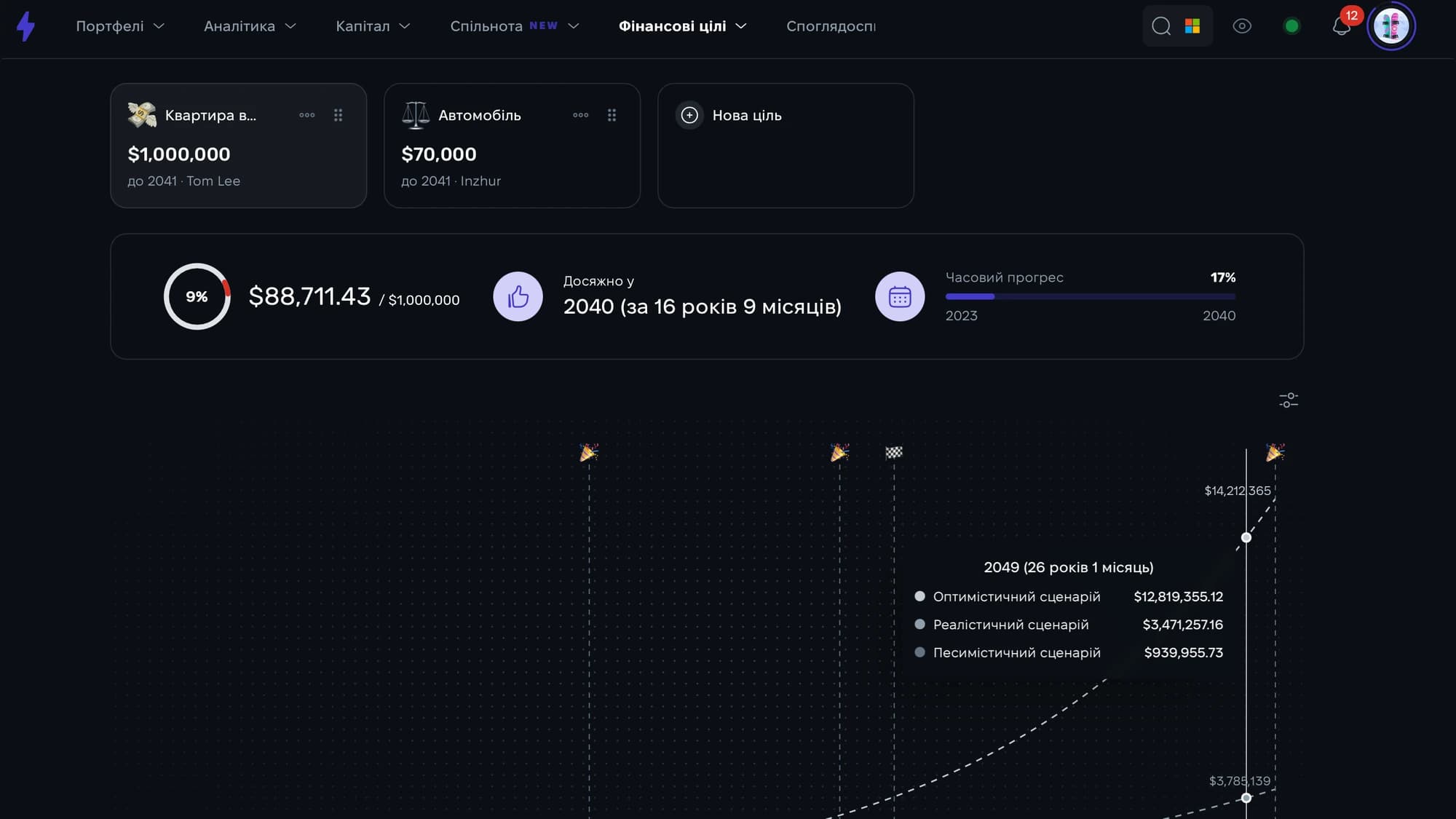
Each goal needs its own allocation, so multiple goals are often managed in separate portfolios. You can record the amount, deadline and monthly contributions for each in the financial goals and planning section.
What portfolio diversification is and why it matters
Diversification means allocating capital so that assets do not all depend on the same risk factors. Ten stocks in US technology companies are ten positions, but they largely share one risk: if the sector falls, the entire portfolio falls.
A diversified portfolio considers variety across asset classes, companies, sectors, countries and currencies. Problems at an individual company or in an industry then have less impact on the result. Diversification does not remove market risk: during major crises, almost all assets can lose value at the same time.
Diversification and asset allocation: what is the difference?
| Criterion | Asset allocation | Diversification |
|---|---|---|
| Question it answers | how much capital to put into each asset class | how to spread risk within and across asset classes |
| Main purpose | align the portfolio with goals, horizon and risk | reduce dependence on individual companies, sectors and markets |
| Where it applies | across the whole portfolio | within each asset class and between classes |
| Role in the portfolio | establishes the overall allocation | protects that allocation from concentrated risk |
Types of investment portfolios
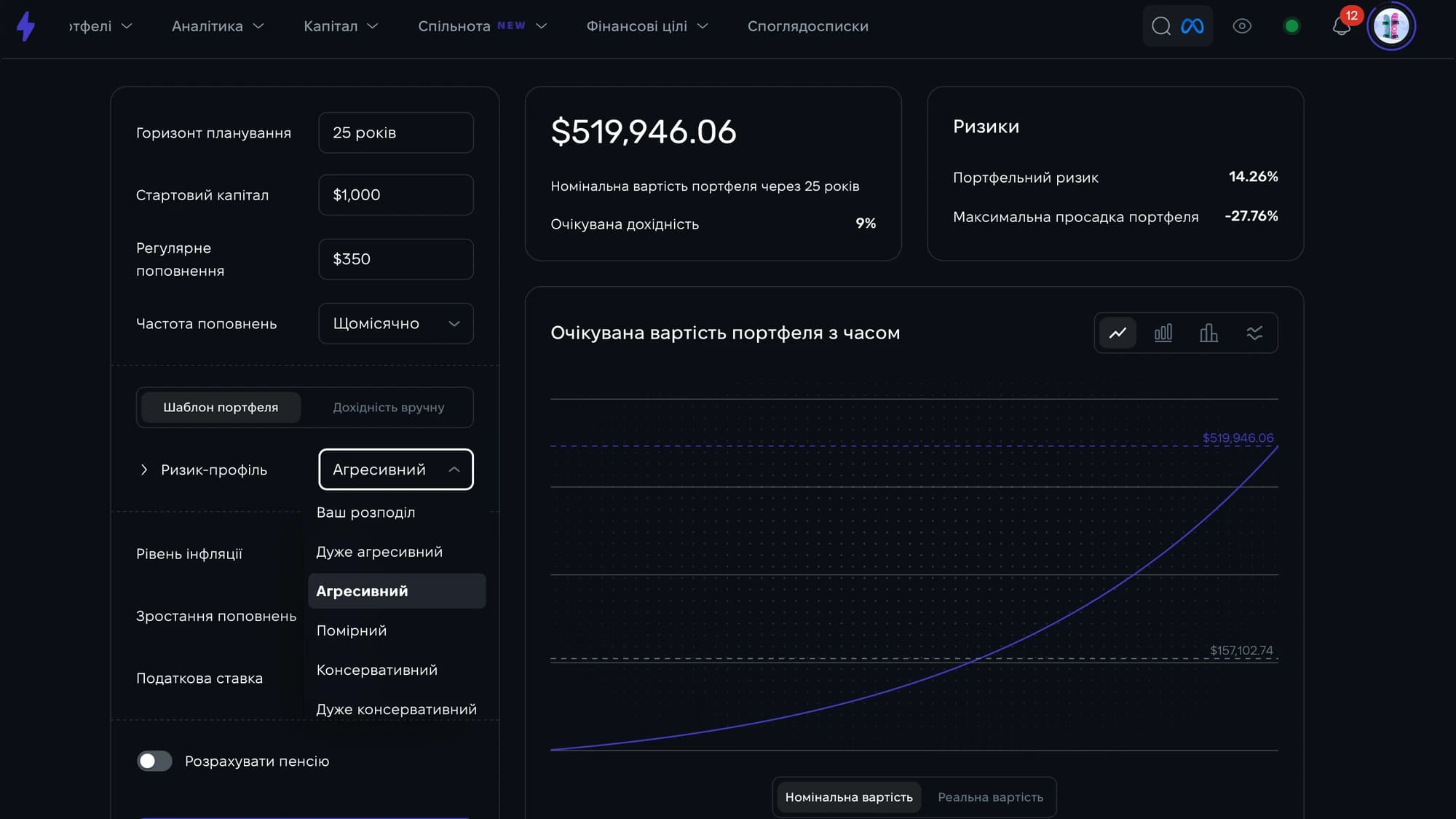
Portfolios can be classified by risk level, purpose and asset mix. For a beginner, the most useful starting point is the balance between risk and potential return. This gives three main portfolio types: conservative, balanced and aggressive.
Conservative investment portfolio
A conservative portfolio focuses on capital preservation and lower volatility. Bonds, deposits and other instruments with predictable income typically form its core, with a small allocation to stocks. Risk is lower, but not zero: inflation, issuer default and changes in interest rates still affect the result.
Balanced investment portfolio
A balanced portfolio combines assets for growth with assets for stability. Its aim is to deliver moderate returns without excessively deep drawdowns.
| Parameter | Balanced portfolio |
|---|---|
| Composition | comparable allocations to stocks and bonds, with some liquid funds |
| Return | higher than a conservative portfolio, lower than an aggressive one |
| Fluctuations | moderate |
| Suitable for | investors with a medium-term horizon and moderate risk tolerance |
Aggressive investment portfolio
An aggressive portfolio aims for maximum growth. Most capital is invested in stocks, including growth companies, sometimes with higher-risk instruments. Potential returns are higher, but drawdowns can be deep and prolonged. This approach makes sense with a long horizon and a real ability to withstand losses.
Growth portfolio and income portfolio
Another classification is based on the main investment goal.
| Parameter | Growth portfolio | Income portfolio |
|---|---|---|
| Main goal | increase capital value | receive regular payments |
| Key idea | profit from rising asset prices | profit from dividends, coupons and rent |
| Assets | growth stocks, broad-market ETFs | dividend stocks, bonds, real estate funds |
| Risk level | higher | moderate |
| Volatility | high | lower |
| Suitable for | a long horizon, no need for income now | a need for passive income, approaching retirement |
If you are building an income portfolio, you can follow payments in the dividend tracker: it shows payment history and a forecast for the coming months.
How to build an investment portfolio: step by step
If you are wondering how to put a portfolio together, start with your goals and constraints. Choosing individual stocks or funds comes last, once you understand what you need them for. This order makes it easier to build a portfolio without random purchases.
Step 1. Define your financial goal
State what you want from your investments and when. "Make money" is too vague. "Save 1,000,000 UAH for a home down payment in six years" is specific.
Step 2. Define your investment horizon
Work out how many years you have before you need the money. If you have several goals, each will have its own horizon and probably its own allocation.
Step 3. Assess your acceptable risk level
Answer two questions separately: how calmly can you handle a drawdown, and how much can you lose without harming your budget? Before starting, build an emergency fund so that unexpected expenses do not force you to sell assets at a loss. We explain how to calculate it in our article on controlling personal finances before investing.
Step 4. Choose your asset classes
First choose the categories and their roles: how much to hold in stocks, bonds and liquid funds. Individual tickers come next.
Step 5. Plan diversification
Check concentration across asset classes, sectors, issuers, countries and currencies. If one position accounts for 30–40% of the portfolio, risk is concentrated in one place.
Step 6. Set portfolio management rules
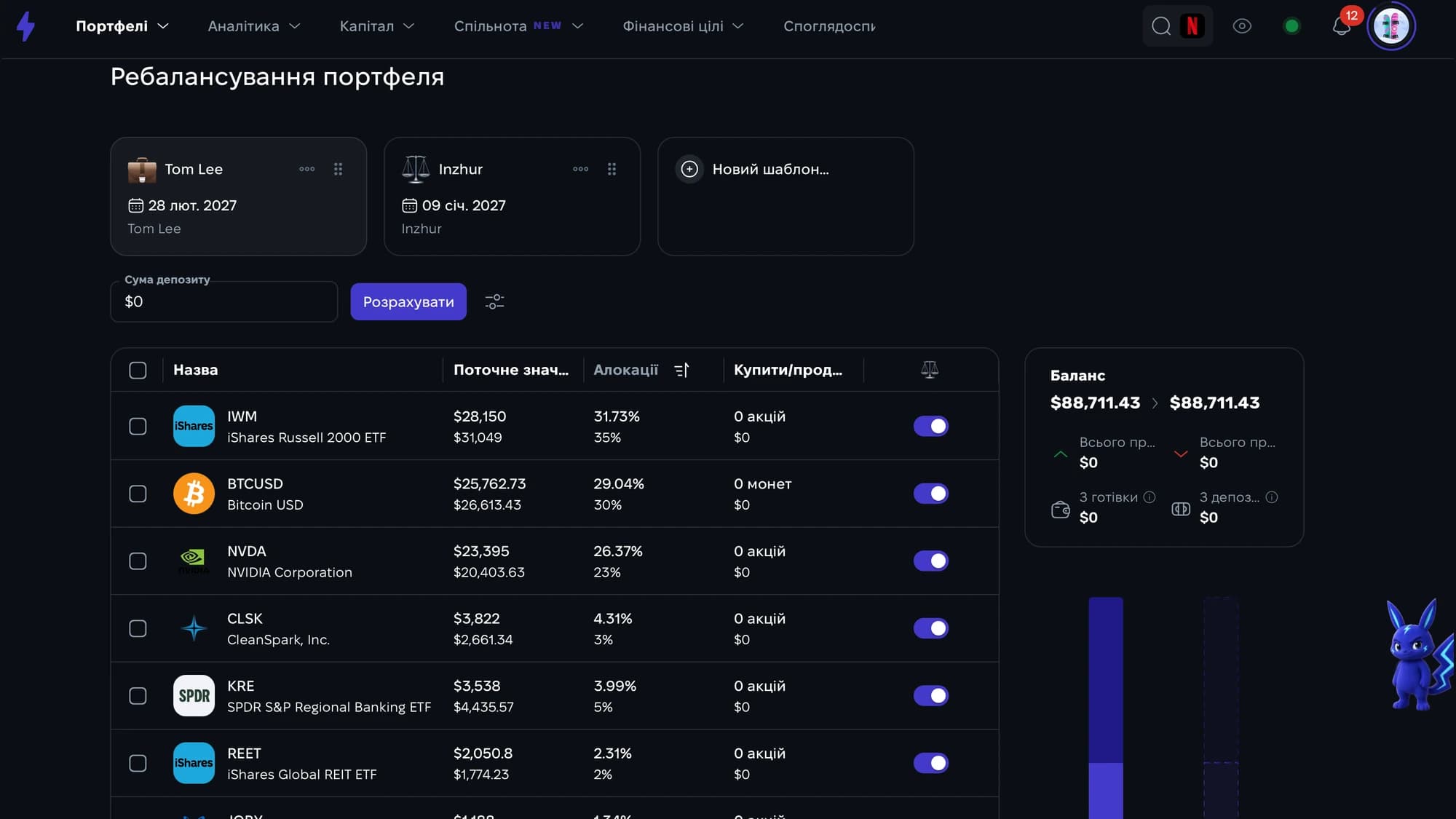
Decide in advance how often to review the allocation, how to distribute new contributions and what deviation from the plan will trigger rebalancing. For example: review quarterly and rebalance if an asset class's weight moves by more than five percentage points. In Strum, you can set a target allocation, and the service calculates which assets to buy with a new contribution.
Example investment portfolios for a beginner
Below are three hypothetical scenarios. The percentages are educational examples to illustrate allocation logic. They are not investment recommendations.
| Cautious | Balanced | Growth-focused |
|---|---|---|
| Goal: preserve capital and outpace inflation. Horizon: 1–3 years | Goal: moderate capital growth. Horizon: 5–10 years | Goal: maximum capital growth. Horizon: ten years or more |
| 70% bonds, 20% cash, 10% stocks or ETFs | 50% stocks and ETFs, 40% bonds, 10% cash | 80% stocks and ETFs, 15% bonds, 5% cash |
| Minimal fluctuations, money can be accessed quickly | Stocks provide growth; bonds soften drawdowns | A long horizon allows time to ride out market downturns |
The scenarios differ in their balance of risky and stable assets. That balance depends on the time horizon and goal discussed above.
Common mistakes when building an investment portfolio
| Mistake | Why it is a problem | What to check |
|---|---|---|
| No goal | you cannot tell whether the portfolio is doing its job | whether the amount and deadline are written down |
| All money in one asset | one failure affects all your capital | the weight of your largest position |
| False diversification | many positions share the same risk | sectors, countries and currencies of the assets |
| Choosing solely on past returns | past results do not guarantee future performance | why the asset rose and whether those reasons still apply |
| Ignoring fees and liquidity | fees reduce returns; accessing money on time can be difficult | total costs and the time needed to sell an asset |
| Frequent emotional changes | buying at the peak and selling at the bottom | whether the decision follows your rules |
| No tracking | actual returns and allocation are unclear | whether you can see P&L, dividends and allocation |
| Treating high potential returns as guaranteed | risk is underestimated | what happens if the portfolio falls by 30–50% |
Checklist before building your first investment portfolio
Go through the points and mark those you have completed. If most remain unticked, return to the steps above.
- I have defined a financial goal with an amount and a horizon.
- I have an emergency fund.
- I know how much I can invest without harming my budget.
- I have assessed acceptable risk, both psychologically and financially.
- I understand when I may need this money.
- I have chosen an allocation across asset classes.
- I have checked diversification across sectors, countries and currencies.
- I have set rules for rebalancing and restructuring the portfolio.
This material is for informational purposes and is not investment advice. You make your own investment decisions.